10 Affiliate Marketing Mistakes Beginners Can Avoid
Build trust, check your links, and measure what matters. Small changes for a stronger publishing routine.
In this guide
Starting affiliate marketing on Pinterest often begins with a reasonable impulse: find a promising product, create a Pin, and see whether anyone responds. The trouble comes when speed replaces the research and editorial decisions that make a recommendation useful. A good Pinterest campaign needs a clear audience and a destination that delivers.
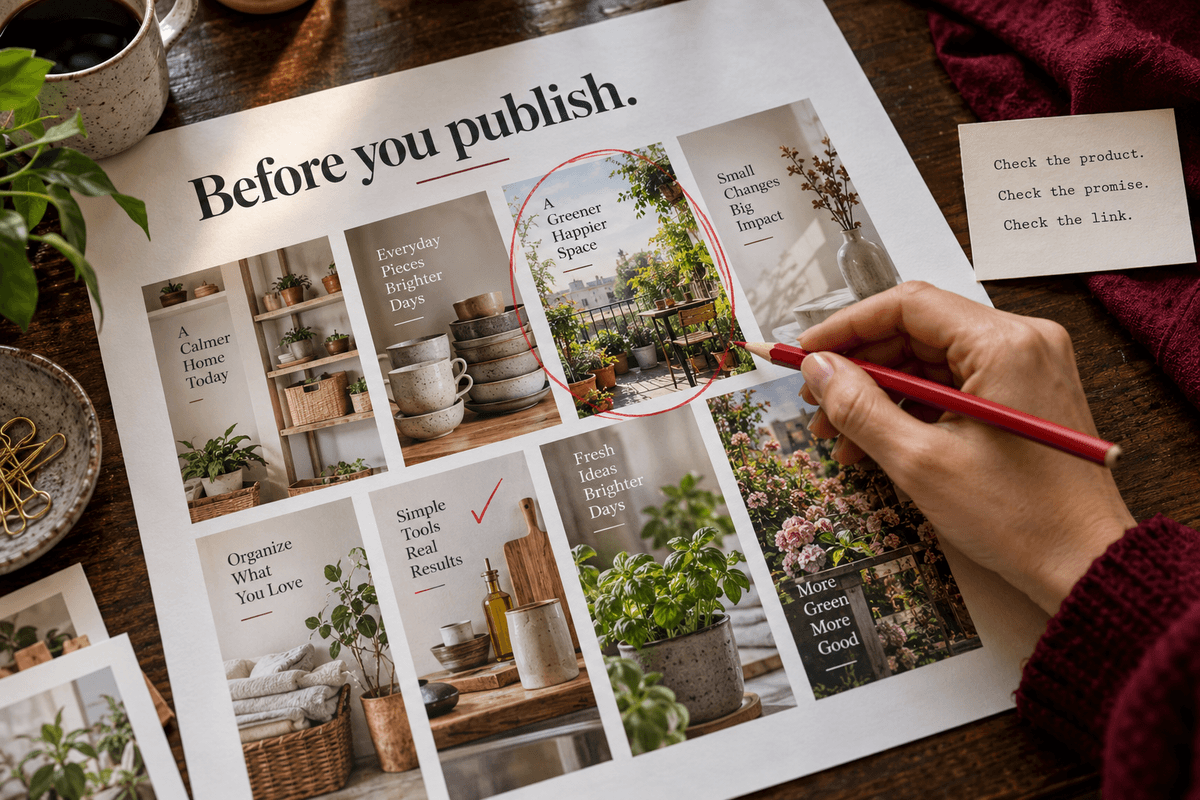
Use this list to review your Pinterest affiliate campaign before publishing. Whether you are creating Pins from Amazon product URLs in Profit Pins or refining an existing article, these checks help you connect the product, message, and destination. Build a repeatable Pinterest routine you can improve as you learn.
1. Choosing products only for the commission
A generous advertised rate can distract you from the most important question: does this product help the reader? If the audience does not need the offer or cannot understand why it fits, a larger percentage does not solve the mismatch. Rates and program terms can also change.
Start with the problem, identify useful options, and compare program terms afterward. Write down the reason you would recommend an item even without a commission. If you cannot provide one, leave it out and keep researching. Your publishing direction should survive a change to one program’s payout.
2. Covering unrelated topics too soon
A site that jumps between gardening, office software, pet supplies, and travel luggage is hard to explain to a new reader. It also creates a large research burden. Each topic has different products, questions, imagery, and maintenance needs, which can overwhelm a small publishing routine.
Choose one audience and a few connected questions. For a small-space living blog, storage, lighting, and compact furniture may fit naturally. Keep a backlog for other ideas rather than publishing every opportunity immediately. A coherent group of guides gives readers a reason to explore beyond the first page.
3. Publishing a shopping list instead of an answer
A collection of product names and purchase buttons gives readers little help deciding. They still need to know what matters, what tradeoffs exist, and whether a purchase is necessary. Rewriting a merchant’s description rarely answers those questions in a way that is specific to your audience.
Add decision criteria, original examples, useful measurements, or a practical walkthrough. Explain who each option suits and what would make you skip it. Read the article with the product links ignored. If there is no useful explanation left, improve the content before adding another recommendation.
4. Making the commission relationship hard to notice
Readers should understand when you may earn from their purchases. The FTC’s guidance calls for clear and conspicuous disclosure of material relationships. A hidden note on a separate page may not give someone the context they need when reading a particular recommendation.
Use plain language near the recommendation, and check the program’s additional requirements. Review the disclosure on mobile as well as desktop. Treat it as part of the useful explanation rather than an interruption. Clear disclosure helps someone evaluate your recommendation with the relevant relationship in view.
5. Presenting research as firsthand experience
Saying “I tested this” when you only read a specification sheet misrepresents the basis of the recommendation. So does presenting an illustrative image as evidence of a real result. Readers need to distinguish practical observations from assumptions, especially when compatibility or performance affects their decision.
Describe your method honestly. Explain which details you measured, which came from the manufacturer, and what you could not verify. You can write a helpful comparison from documented research when the limits are clear. Save personal endorsements for experiences you can truthfully describe.
6. Sending a Pinterest Pin to the wrong destination
A Pin promising a packing checklist creates a specific expectation. If it opens a homepage or an unrelated product page, the visitor must start searching again. Even an attractive Pin can lose its usefulness when the next step does not match the idea that earned the click.
Link directly to the promised guide and test the complete path after publishing. Compare the Pin headline with the article title and opening paragraph. Keep tracking parameters consistent if you use them, but make sure they do not break the page or change the intended destination.
7. Treating publishing volume as the whole strategy
A demanding schedule can encourage repetitive creative, rushed articles, and unchecked links. More uploads do not fix an unclear audience or an unhelpful destination. Pinterest’s commercial-content guidance also expects affiliate content to add original value, so avoid building a routine around near-identical promotional posts.
Choose a cadence that leaves time for research and review. Develop distinct angles from substantial articles, and keep a simple record of where each Pin leads. Scheduling can help you stay organized, but it should support editorial judgment rather than replace the decision about whether something is worth publishing.
8. Confusing attention with approved earnings
Pinterest impressions, saves, website visits, affiliate clicks, and commissions describe different actions. A large number at the start of the journey can exist alongside very few purchases. Pending commissions can also change after returns, cancellations, or program review. Looking at one headline number hides those differences.
Keep a small report for the stages you can measure. If a Pin attracts clicks but visitors leave, investigate the destination. If the article helps readers but few open a product link, inspect the recommendation’s fit. Use evidence to find the next question rather than assuming every problem requires more traffic.
9. Leaving old articles unchecked
Products disappear, instructions change, and a once-useful link can stop working. Old screenshots may no longer match a tool’s interface. These problems are easy to miss when all your attention goes toward new posts, yet readers can still arrive through an older Pin.
Maintain an editorial checklist and a review date for each guide. Check product availability, link destinations, specifications, and any time-sensitive claims. If you make a substantive change, update the article’s revision date honestly. Remove recommendations you can no longer support instead of keeping them because they once performed well.
10. Making big decisions from tiny samples
A few days of results rarely explain an entire niche. Early traffic may be uneven, and a handful of visits cannot reliably tell you which image, headline, or recommendation is best. Replacing the whole strategy after every fluctuation makes it difficult to learn anything useful.
Define a manageable publishing commitment and a review period. Keep notes about what you changed and why. Improve one important part of the journey at a time, while watching for repeated patterns. The goal is a reliable way to create helpful content and make informed decisions, with realistic expectations about the work involved.
Use Profit Pins to review your Pinterest campaign before publishing
Create your Pinterest Pins in Profit Pins from an Amazon product URL, then check the details before you schedule. Does the creative show the right product? Does the headline match the destination? Is the Link field pointing to your intended article or eligible affiliate offer?
Keep the Amazon product source separate from your commission tracking. Importing a product into Profit Pins does not enroll you in Amazon Associates or create an approved affiliate relationship. Add your own eligible affiliate destination where appropriate. A clear review in Profit Pins keeps your Pinterest creative, copy, board, and destination aligned.
Sources & further reading
Platform features and program rules change. Check these official resources for current details.
Keep exploring: How to Start Affiliate Marketing, Step by Step
Written by Profit Pins Team